
Inside the Georgia Warrant System
The Georgia warrant system ties court files, county and city service assignments, and restricted agency networks into one process. One piece never fits all. The issuing court controls its order. A sheriff or assigned officer serves it. Authorized agencies can query GCIC and NCIC through approved channels, but the public cannot. None of these layers builds a public search of active Georgia warrants. To check status, find the court and county named on the notice, ask the clerk whether the file transferred, and then contact the assigned service unit. The County Directory routes you to those local channels, while the current order stays with the court itself.
Georgia Has No Public Warrant Search
Georgia has no public statewide warrant search. Georgia.gov points residents to the county sheriff, and each sheriff holds only that county's warrant information. A local wanted list shows what that one office publishes. It can miss a city-court order or a record issued days ago. Asking the county directly costs nothing. Methods vary, though: some offices answer by phone, while others require government ID in person, and the state warns that custody may follow if a warrant turns up. Request copies from the agency or clerk that holds the record. Start with Georgia.gov's existing-warrant instructions, then use the County Directory to find the right local office.
Georgia Statewide Warrant Databases
Several Georgia systems get mistaken for a public warrant site. GCIC is run by GBI for criminal-justice agencies. NCIC is an FBI law-enforcement information file. GECPS sends court citation and FTA events to DDS. Gavel and E-Access cover court case management and provider access, so neither works as a public index of all warrants.
| System | What It Holds or Does | Access and Limit |
|---|---|---|
| GCIC / NCIC | Criminal-justice and wanted-person information for authorized agencies | No public search; entry and coverage are not published as a complete roster |
| GECPS | Secure court/vendor reports for citations, FTA, and withdrawal events to DDS | Not public and not a general warrant database |
| DDS Online Services | The account holder's license status and reinstatement information | Personal license view, not a court warrant record |
| Gavel / E-Access | Participating court case management and a directory of access providers | Coverage is phased or court-specific; no statewide warrant completeness claim |
Note: GCIC, NCIC, GECPS, and Gavel support distinct Georgia functions; none provides the public with a complete statewide warrant search.
Georgia GCIC Is Restricted to Agencies
The Georgia Crime Information Center is a GBI-run information service for criminal-justice agencies. It is not open to the public. Authorized offices use it through secure access. That access reaches state records and FBI-linked systems. A separate public criminal-history product exists, but it cannot query a live wanted-person entry or confirm every active warrant. GBI also runs fugitive pages and a tip channel, which sit apart from any personal status check. GBI publishes its own service description. It spells out GCIC's duties and the limits on criminal-justice information in Georgia. Read the official GBI GCIC service description for the agency's role; that page describes the service, not a warrant record or a public form.
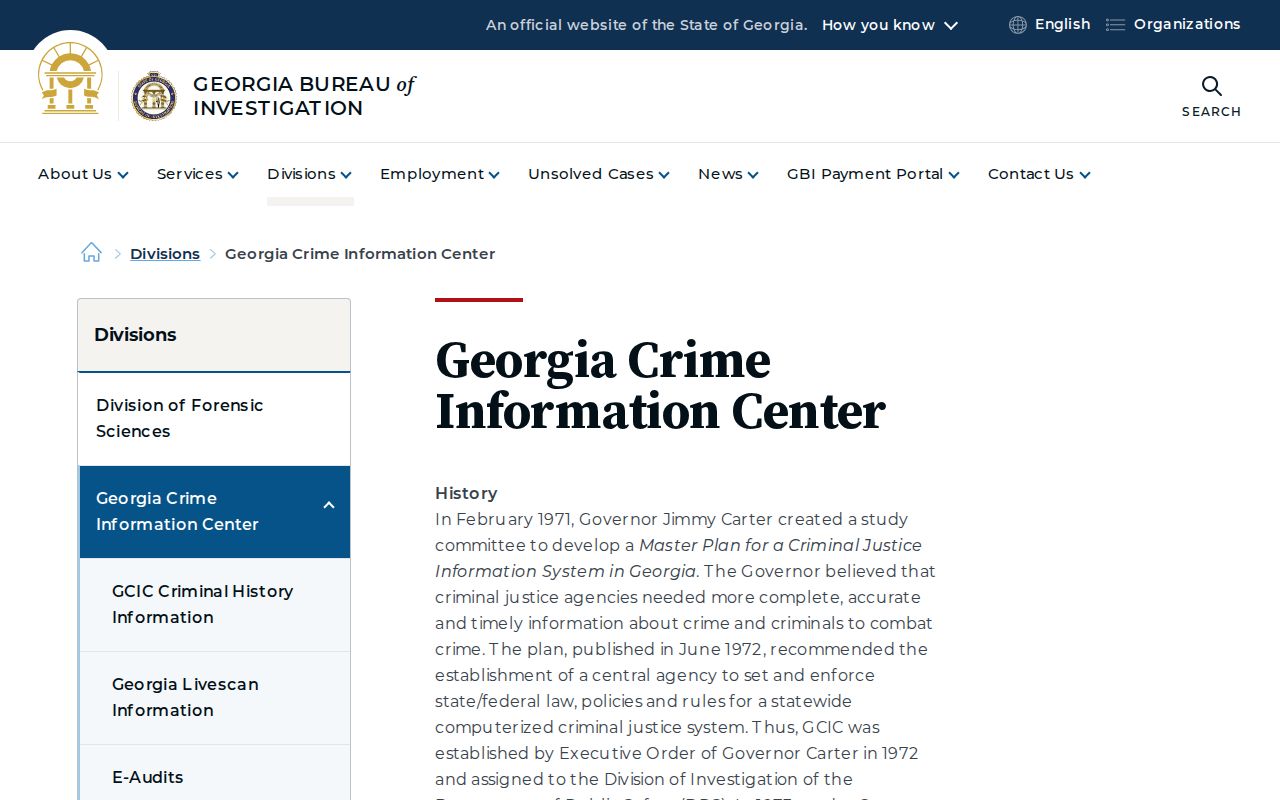
Georgia's restricted law-enforcement networks support authorized checks only, with no public search attached. For your own case, call the issuing court and the local service office.
How Georgia County Warrants Reach the State
A Georgia warrant starts in a court file. An authorized judicial officer signs the order. Service then falls to the assigned sheriff, police department, or other officer. Local agencies can enter and query GCIC or NCIC when authorized, but the exact agency-to-agency steps stay inside law enforcement. The state publishes no county participation map, update schedule, or public feed.
Possible law-enforcement path: Issuing court → assigned service agency → authorized GCIC / NCIC use when an agency enters a record. This is not a guaranteed pipeline for every warrant, and no public state index sits at the end of it.
In Georgia, the bond and any recall stay court matters. The original order does too. After a bindover, ask the originating clerk which prosecuting court now holds the file. A sheriff's status channel covers its service record only, never the judge's docket entry.
Georgia County Warrants Stay With the Court
Agency networks never turn local warrants into public state results. Georgia publishes no county-entry map, update times, or lower-court coverage list, so no one can promise full coverage. E-Access lists participating case providers. A docket there may omit the warrant or its current service status. A blank sheriff list proves little. Ask the clerk and the service agency whether a separate city or court record exists in that Georgia county. Use the County Directory for local contacts. Treat a public list as a clue, not proof that no warrant exists.
Note: A Georgia agency entry does not replace the issuing court's original order, current bond conditions, or a judge's later recall decision.
Fugitive Warrants and the US Marshals
The U.S. Marshals Service handles federal warrant service and fugitive investigations, and its Southeast Regional Fugitive Task Force works with partner agencies in Georgia. The task force is an interagency operation. It is no court and no public index. A county warrant stays a local matter. A separate federal case or authorized task-force assignment changes that. Georgia spans three federal districts. The Northern, Middle, and Southern U.S. District Courts divide the state. Federal arrest warrants follow Federal Rules of Criminal Procedure 4 or 9. PACER shows public docket material only. It cannot return an active-warrant status or open sealed cases and documents. The court's Northern District of Georgia court information page illustrates that district structure, so confirm the correct district and case path with counsel or the court.
Georgia Federal Warrants Cross Three Districts
Georgia's federal districts split into separate divisions and venues. A federal case needs its own court. Ask counsel or the district clerk where the case sits, because a state or county result cannot rule out federal process. The court's official divisions page maps each district's divisions and county assignments across Georgia. That page gives geographic context only, not a list of warrants or subjects. See the Northern District of Georgia court-location information for it.
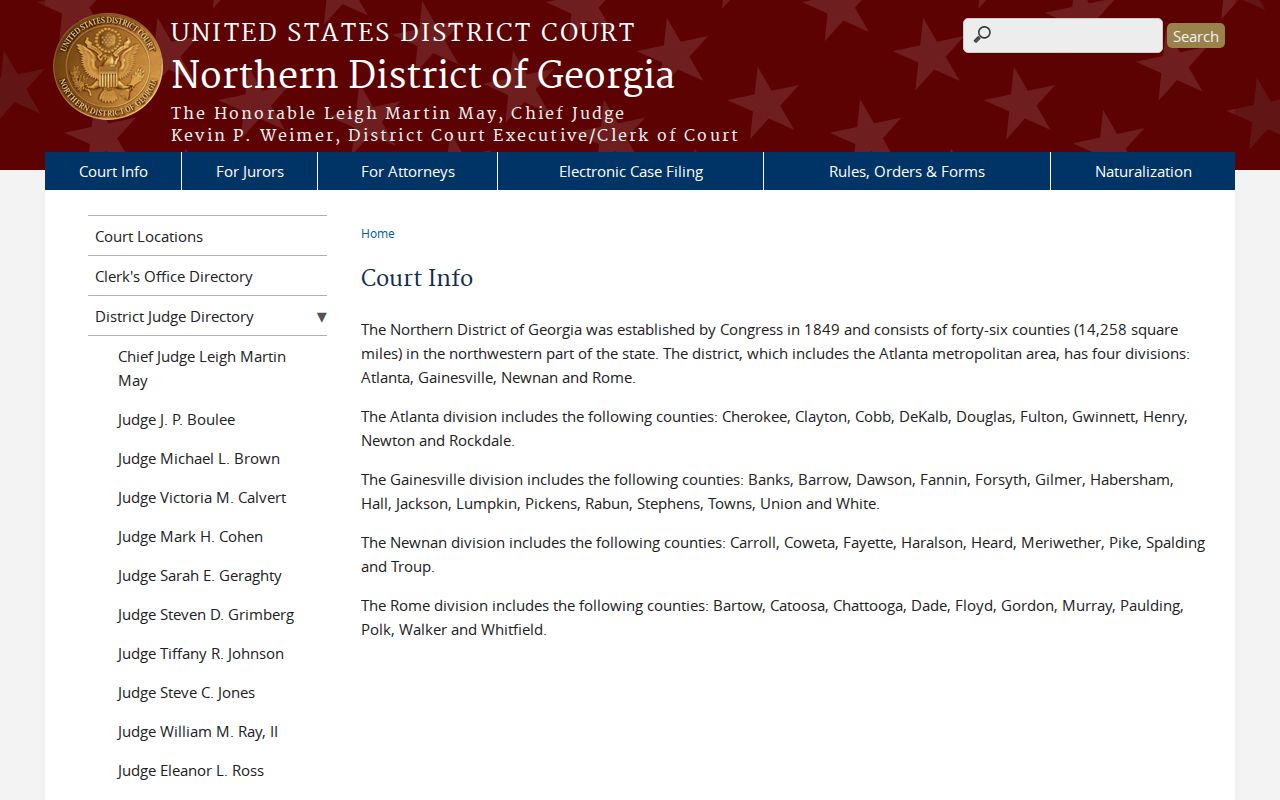
The USMS lists separate district contacts for Northern, Middle, and Southern Georgia. Those federal offices handle fugitive matters; they do not run a public state warrant check for visitors.
Georgia Statewide System vs County List
In Georgia, the words "statewide system" get used for secure agency files, a traffic reporting channel, and a court-access project. None of them replaces the issuing court's warrant file. The actual record sits with county and city offices, and each office sets its own rules for public inquiries.
| Question | State or Agency System | Local Court / Sheriff |
|---|---|---|
| Can the public search by name? | No public Georgia warrant query | Method varies by local office |
| Who holds the order? | GCIC / NCIC are not the court's original docket | Issuing court or current clerk after transfer |
| Who confirms service? | Authorized agency access only | Assigned sheriff, police, or service unit |
| What proves recall? | A system update alone is not the judge's order | Court docket entry or signed recall order |
For a personal warrant search in Georgia, go through the issuing court in that county. Skip the shortcut thinking. One local list coming up empty proves nothing; another court or agency may still hold a record.
Note: Georgia statewide systems describe agency access and local record custody; they do not create one current public warrant roster.
Georgia's 370 Municipal Courts Keep Local Warrants
Georgia's court map is more crowded than most. The 2025 AOC guide counts 370 Municipal Courts, 159 Superior Courts, and 159 Magistrate Courts, each keeping its own files and case types. So a city traffic or ordinance failure to appear can sit on a Municipal Court docket while the county sheriff's page shows nothing. Superior Court holds general and exclusive felony trial jurisdiction, yet a Magistrate or other authorized judicial officer can issue an initial arrest warrant. Which clerk holds the current file depends on the court tier and whether a bindover happened. That is why the issuing court printed on a ticket or notice beats assuming one statewide office holds every warrant. The AOC's 2025 guide to Georgia courts lays out the structure and the published counts.
Georgia Warrant Technology and History
The technology story has two separate threads. GBI dates GCIC to 1973, when Georgia built a criminal-justice information center for state agencies, adding secure communications and authorized state and federal data access for law enforcement. That history is an agency service record, not the launch of a public warrant lookup. The courts thread runs through Gavel, picked after procurement and first released in December 2025. GBI also reported a migration in its law-enforcement communications layer in April 2024, but that work sits apart from the courts' path. AOC describes further Gavel releases and court-by-court data migration through 2026, and the Gavel project history shows the rollout is phased. The official court platform overview reflects case-management modernization, not a statewide warrant register.
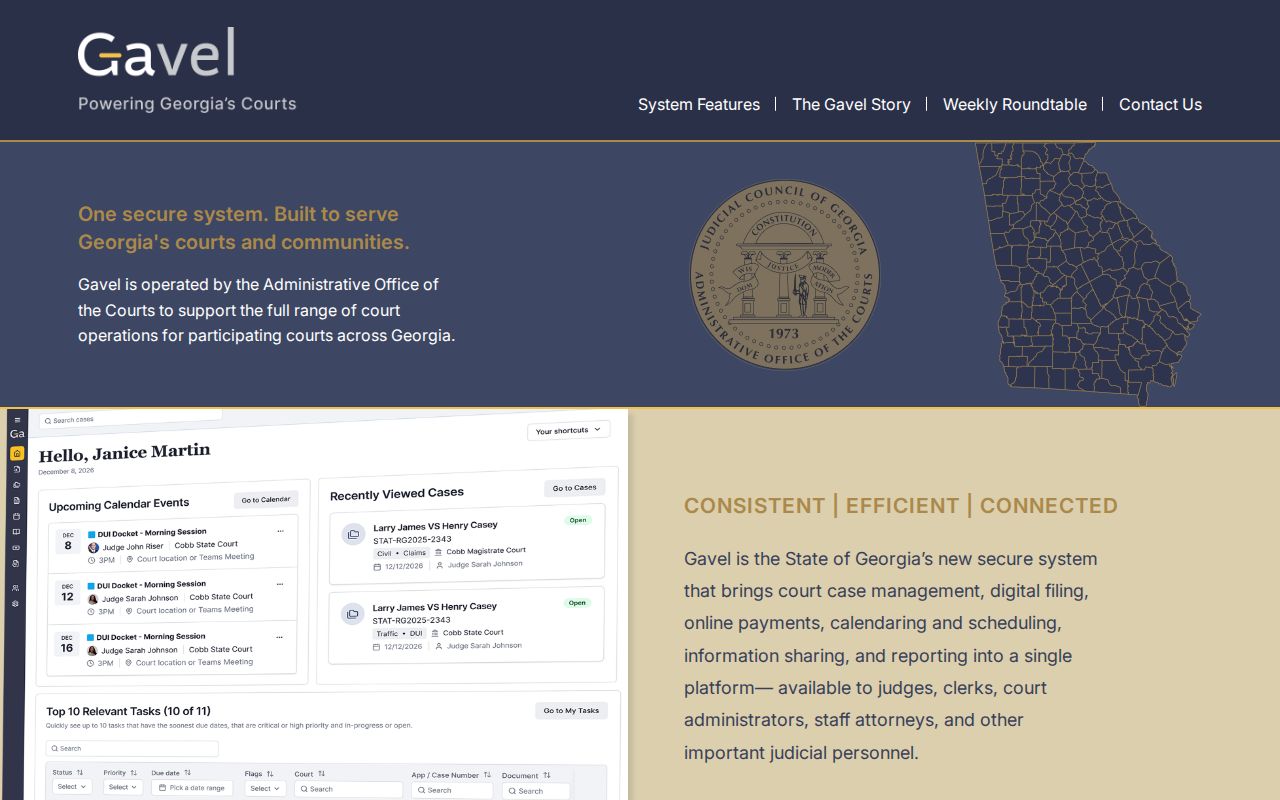
Public case access in Georgia may improve as more courts migrate. The original order and its service status still live with local courts and agencies.
Gavel's Georgia Rollout Is Not a Warrant Index
Gavel brings case management, e-filing, calendars, payments, and public access features as Georgia courts join its phased rollout. That does not mean every county or Municipal Court has migrated, and it does not produce a complete active-warrant list. E-Access is only a directory of participating providers. Follow the court's own instructions and ask its clerk about a warrant or a transfer, since an absent online record can still exist. For how public case access differs from official status confirmation, see Warrant Lookup.
Note: Gavel's phased Georgia rollout can change case access without changing which court holds a warrant or decides a recall.
Georgia Traffic FTA Reporting Is Separate
GECPS is a secure channel where courts and vendors report citation, failure-to-appear, and withdrawal events to DDS. Its CN, FN, and WN labels are transmission types, not public warrant-status codes. DDS then applies the driving-privilege effect, and a DDS suspension is not itself a court warrant; a personal DDS account also does not show every municipal docket. For a Georgia traffic case, ask the issuing court whether it entered an FTA or warrant and whether it sent a release through GECPS. Then check your own DDS status separately. The statutory 30-day court notice in a defined citation situation and the 28-day DDS clock after receipt of notice are two different timelines, and neither promises every traffic case the same notice. The DDS courts and GECPS overview traces the reporting path.
Georgia Open Records Requests Cannot Create an Index
The Georgia Open Records Act, O.C.G.A. §§50-18-70 through 50-18-78, lets you request qualifying records an agency already holds, subject to exceptions. Send the request to the office holding the record and describe a specific document or file. The law does not force the recipient to gather other courts' records, build a new statewide search, or release material protected by law or court order. DPS runs its own open-records process for DPS-held records, and its fee schedule includes an item for a warrant-related record in DPS hands. That fee is not a fee for checking every Georgia court or sheriff. County clerk and sheriff copy policies are separate, so confirm details with that office. Review the official DPS open-records fee table before requesting a DPS record.
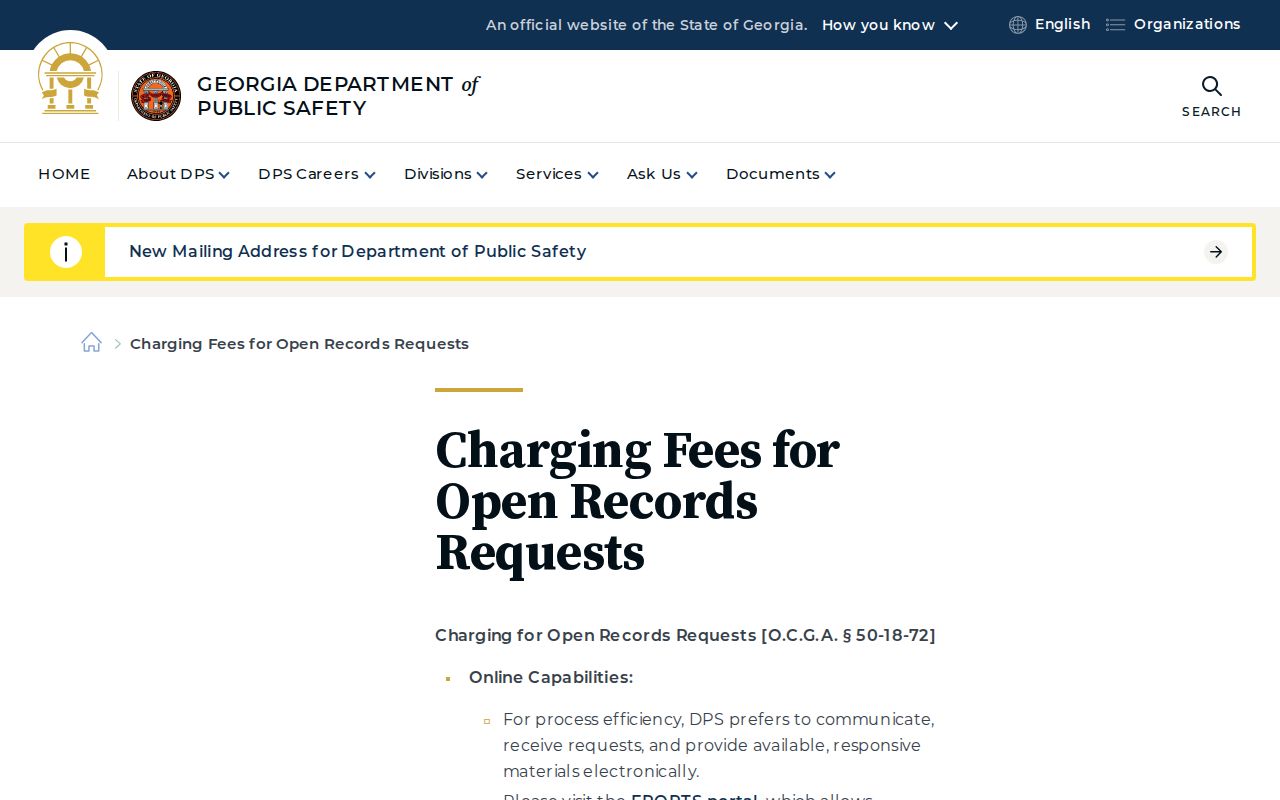
DPS publishes this fee schedule itself. Its scope reaches only records responsive to a request that DPS actually holds.
Georgia Has No Statewide Warrant Amnesty System
No standing amnesty week or central program clears Georgia warrants statewide. Atlanta and South Fulton each announced date-limited municipal programs in 2025, and both have expired. A local event may offer a reset or waive a defined FTA charge. It does not automatically dismiss the underlying case, apply in another city, or clear a DDS hold. If a court announces a new event, read the official notice for its dates, eligible case types, and whether a judge will sign a recall. Otherwise use the normal local route: ask the issuing clerk about status and available appearance or motion procedures, confirm service status with the assigned agency, and keep the court's written disposition.
Note: A Georgia city or county may announce local relief, but eligibility, underlying charges, and judicial recall remain case-specific.