
Georgia Traffic Warrants Explained
A traffic warrant is a court order that follows an unresolved citation or a missed appearance. Only the issuing court decides when one goes out. An unpaid fine by itself tells you nothing. Georgia courts often issue a bench warrant after a failure to appear or another missed requirement. The citation names the controlling court, whether Municipal, State, or another court. A driver-license search never shows the order. Georgia also has no public statewide traffic-warrant lookup. A sheriff's page may cover one county while a city court keeps a separate docket. "FTA" stands for failure to appear, a court event, not proof that every missed date produced a warrant. The issuing court alone confirms whether an order was entered, recalled, transferred, or still active.
Georgia Traffic FTA and GECPS
GECPS is the secure court-side feed that sends citation, FTA, and withdrawal or release events to DDS. Authorized court users sign in to file reports. The message types are CN for a new citation, FN for a new FTA, and WN for a withdrawal. Those are report labels, not public warrant codes. Nobody can search the feed by name or county. The GECPS sign-in is limited to court staff, and the DDS courts page describes how the reporting link works. Georgia driving privileges can shift on these reports. Even so, they do not replace the court docket or confirm a warrant recall. The landing screen is restricted court-reporting access, not a public case search.
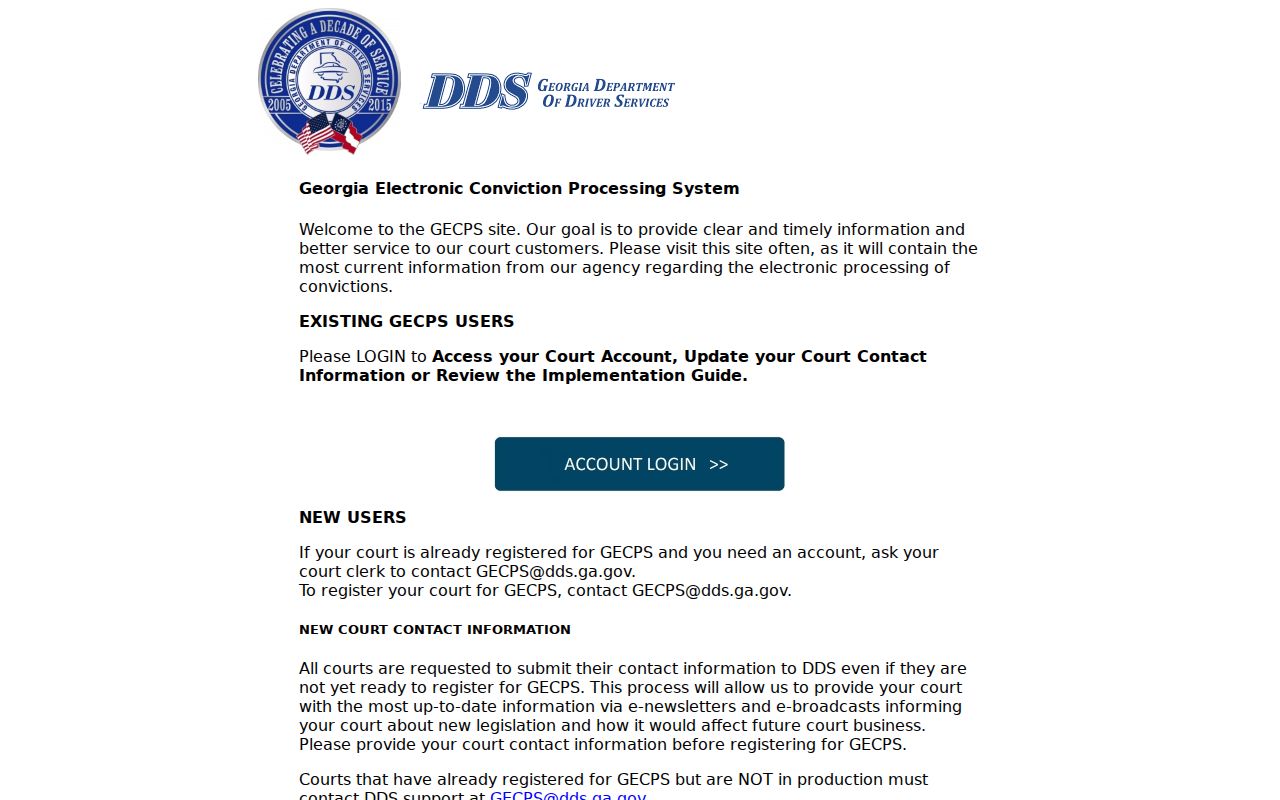
Ask the issuing court about the warrant itself.
Georgia FTA and License-Hold Systems
When a Georgia court reports a traffic case, DDS may add a license hold. It is an administrative restriction, not a warrant. DDS processes a release after the court reports the resolution. Neither step creates a public warrant index. The court clerk confirms the citation and any judicial order. Online access varies by court and may not show every case.
| System | What It Holds | Run By |
|---|---|---|
| GECPS | Secure court/vendor reports for citations, FTA events, and withdrawals or releases | Georgia DDS with participating courts and vendors |
| DDS own account | The account holder’s driver-privilege status and reinstatement requirements | Georgia Department of Driver Services |
| Issuing court docket | The citation, court action, and any warrant or recall recorded by that court | The municipal, State, or other issuing court |
GCIC and NCIC are law-enforcement tools, closed to public searching. A DDS notice, a GECPS message, and a Georgia bench warrant are separate records, and only the issuing court confirms the judicial order.
Georgia Traffic FTA Has Two Clocks
In Georgia, O.C.G.A. §17-6-11 covers one narrow uniform-citation situation, where a driver showed a license instead of certain custody or bail steps. The clerk there may mail notice first. It gives 30 days to dispose of the ticket, waive arraignment, or plead not guilty. If the matter stays open, the court may report it to DDS within five days unless it orders otherwise. That is not a grace period for every ticket. Georgia's DDS runs a separate FTA suspension clock. It counts 28 calendar days after DDS receives the court notice, not after the court date. Two clocks, two starting points. The Title 17 supplement and the issuing court can clarify which process applies.
Timing: The 30-day court notice is limited to a statutory citation category; DDS’s 28-day suspension period begins only after DDS receives a court report.
Note: Neither Georgia clock tells you whether a warrant was issued; the issuing court confirms the citation and any judicial order.
Checking for a Georgia Traffic Warrant
Georgia Courts' ticket locator points to participating vendors rather than one centralized citation search. Coverage and search fields differ by court. Tickets can take 7–21 business days to appear. A missing result is not clearance, and a missed date calls for the court named on the citation. Atlanta Municipal Court offers a different tool: its Find My Case page includes a warrant-number search mode, while its payment route uses a citation or case number. Those are city-court options, not a statewide Georgia warrant or citation search.
- Read the ticket, summons, or court notice and note the city, county, court name, case number, and scheduled date.
- Use the judiciary’s locator only to find a participating case or payment provider; a missing result is not a warrant clearance.
- Contact the court named on the notice and ask whether an FTA was entered, a bench warrant issued, or the matter transferred.
- Open the relevant county in the County Directory to reach local court or sheriff information if the case record points there.
- If the question is about a DDS suspension, check the named person’s own authenticated DDS account separately from the court case.
The clerk confirms the citation and warrant record. The sheriff or city unit handles its own service and bond process. Georgia.gov explains that sheriff information stays county-specific, and because an in-person inquiry can carry custody risk, the named person may want counsel first.
Georgia Traffic Citation Checks Start Local
If a family member missed a date, the citation identifies the issuing court. Ask the clerk pointed questions. Did the court mark an FTA, issue a warrant, allow a reset, or send a release to DDS? An online vendor or DDS account may not show the court event at all. The DDS failure-to-appear FAQ explains license suspension and notes that most Georgia courts send release information electronically. Ask whether a release was transmitted. Then check the person's own DDS account. That workflow still does not establish whether a judge recalled a warrant. The DDS page offers license guidance, not a warrant search.
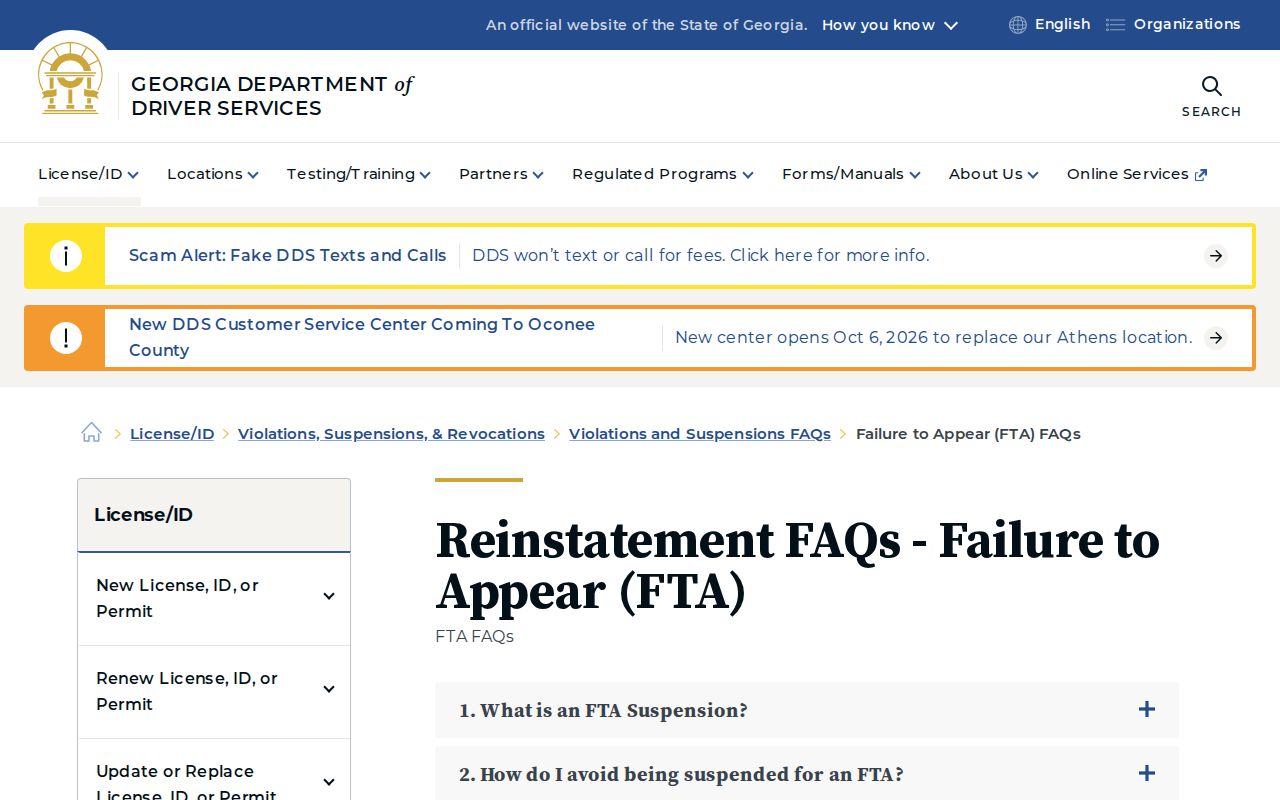
Use the notice to find the issuing court. Check DDS separately for license status. Note: If one Georgia office has no record, ask which court or service agency owns the next step rather than treating the search as done.
How to Lift a Georgia Traffic Warrant
Only the issuing court can lift a Georgia traffic warrant. Usually that is the municipal or state court named on the citation. The judge decides whether payment, an appearance, a new date, or a motion fits the case, and bond is a release condition rather than the citation fine. An online payment may not recall an active warrant at all. Ask the clerk whether the judge must sign an order or set a hearing. Atlanta Municipal Court handles its FTA reset form in person, limits online payment to eligible Traffic Violations Bureau offenses, and requires the issuing judge to clear the warrant. That is one Georgia city court's process, and it does not control another one.
- Confirm the citation, the issuing court, the current warrant status, and the next required date.
- Ask what the court permits for that case, such as appearing, paying an eligible fine, or requesting a reset or payment arrangement.
- Ask whether the judge has recalled the warrant and whether the court has sent any required release to DDS through GECPS.
- Keep the court’s receipt or docket confirmation, then check the person’s own DDS status if a license suspension also applied.
Georgia runs no standing statewide traffic-warrant amnesty. Atlanta's 2025 traffic FTA program has ended. Any future relief stays tied to its named court, its dates, and its eligible cases, and a past fee waiver or new date does not by itself prove a current warrant was recalled.
Caution: A ticket payment does not automatically recall an issued warrant. Confirm the judge’s action with the issuing court before treating the case as cleared.
A Georgia DDS hold can stay in place until DDS receives and processes the court's release, so confirm both records separately.
Georgia Traffic Warrant and DDS Fees
Money here moves on separate tracks. Georgia DDS charges an FTA reinstatement fee of $90 by mail and $100 online or in person after an applicable suspension. Resolve the case before the suspension starts and the fee may never apply, since driving privileges return once the court's release reaches DDS and any required fee clears. That money is not the court fine. Georgia has no statewide citation fine. Warrant-bond amounts vary by court too. Where a professional surety bond is allowed, Georgia's Title 17 caps the premium at 15% of the bond face amount, surcharges included, with a $50 minimum per bonded offense. Ask the court for its bond order. The DDS fee page lists its payment channels but covers license fees only.
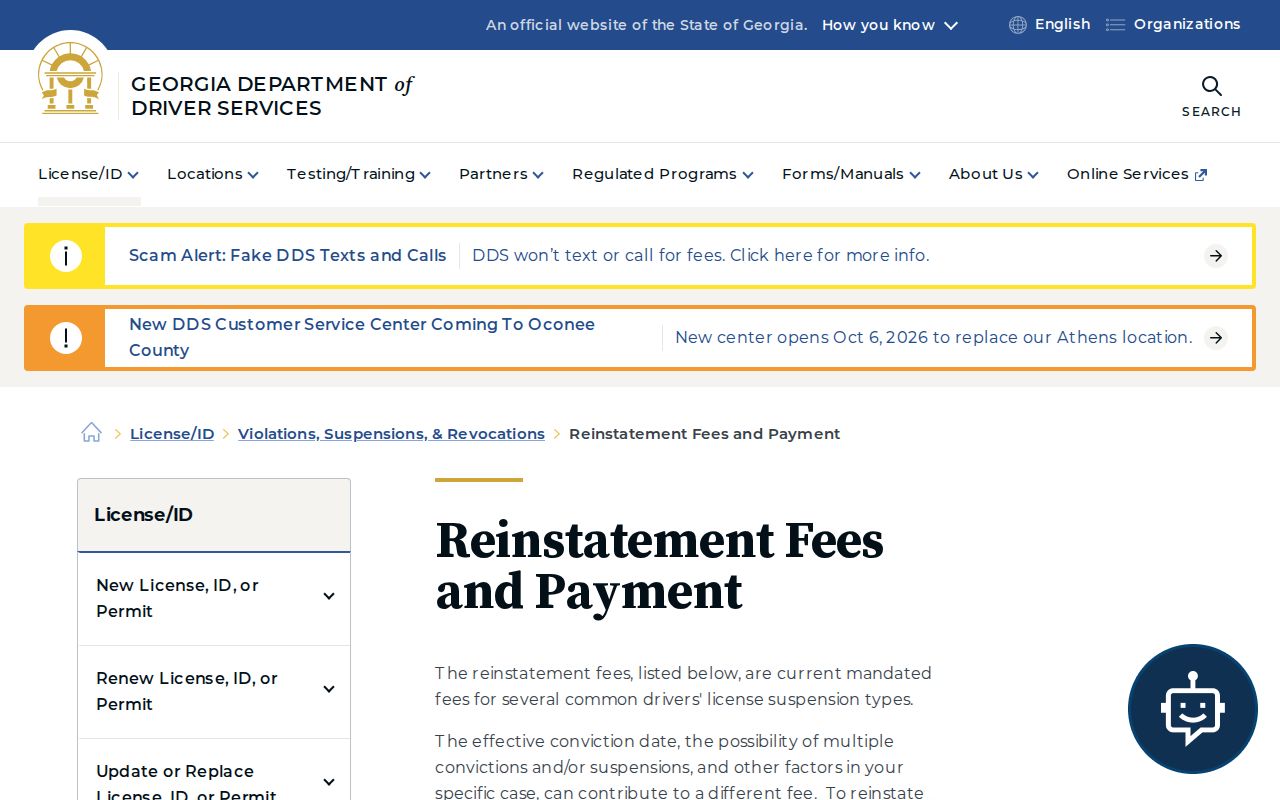
Ask the issuing court about any separate fine, bond, or recall requirement. DDS My Online Services requires the account holder's sign-in. It does not search another person's license or warrant, only the authenticated route for the account holder.
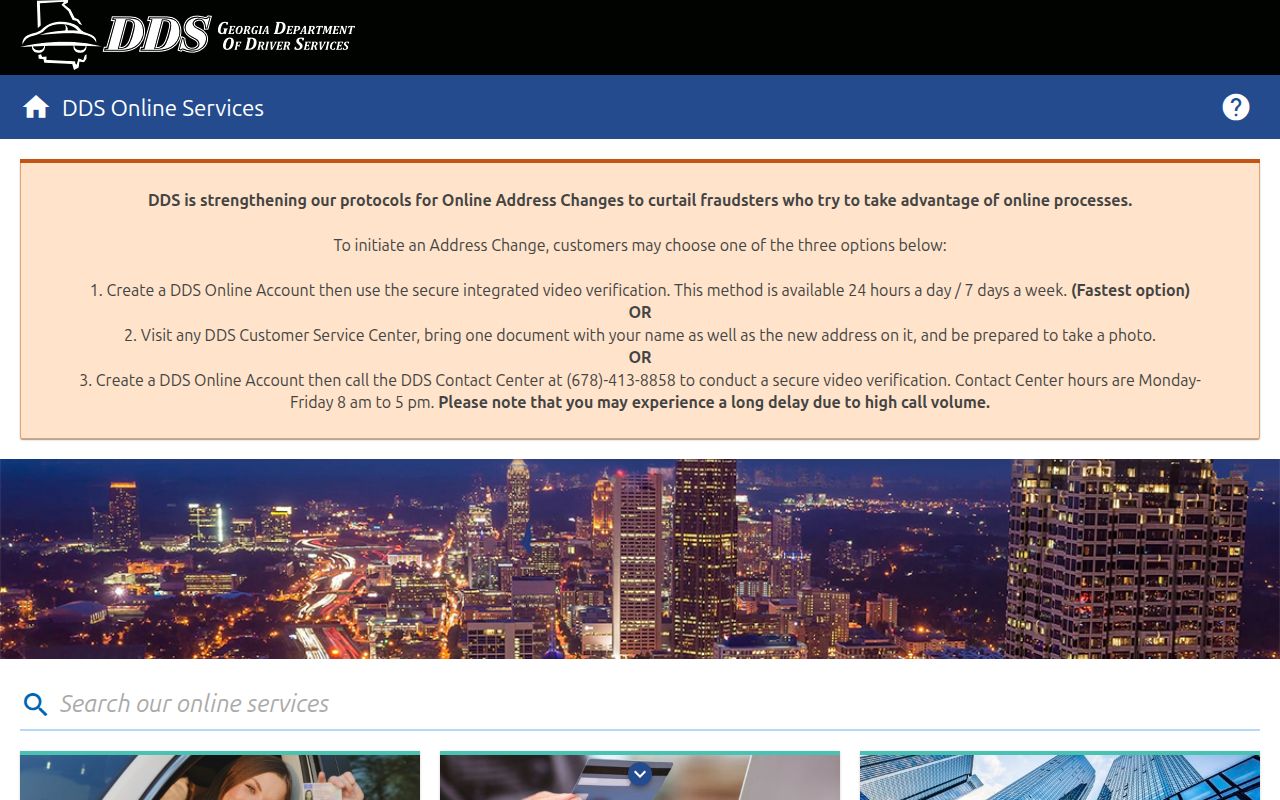
License status lives at DDS. The citation, fine, bond, and warrant belong to the issuing court.
Note: Georgia court fines, warrant bonds, and DDS reinstatement charges sit with different offices and each needs its own confirmation.
Georgia Traffic Warrants Need Court Confirmation
A paid citation receipt is not proof of recall. Online payment options cover eligible cases at participating courts only. Ask the Georgia clerk whether the judge has acted, whether a new appearance is required, and which docket entry confirms the recall. The court can send a license release through GECPS while the warrant still needs its own separate action. A cleared DDS suspension or a zero balance proves nothing either. Keep your receipt and the court's confirmation side by side. Georgia materials tend to say "bench warrant" and cite failure to appear, and no uniform statewide capias-for-fines rule exists. After a payment or a missed date, confirm the Georgia judge's warrant decision separately from the remaining citation balance.
How a Traffic Warrant Differs From a Driver Record
A traffic warrant is a court order; a driver record is DDS license status and history. They answer different questions. A Georgia warrant can sit alongside no suspension at all, and a suspension can exist with no warrant. The court named on the citation controls its order and disposition, while DDS speaks only to the driver's own license status. Neither search confirms the other record.
| Feature | Traffic Warrant | Driver Record |
|---|---|---|
| What It Is | A court order about a citation or required appearance | License status and driving-history information |
| Custodian | The municipal, State, or other issuing court | Georgia Department of Driver Services |
| How It Clears | The issuing court records recall or other disposition | DDS processes license reinstatement under its rules |
| Where to Check | The issuing court, reached through the County Directory | The driver’s own DDS account or DDS notice |
A restored DDS status does not confirm that a Georgia traffic warrant was recalled, so check the issuing court.